

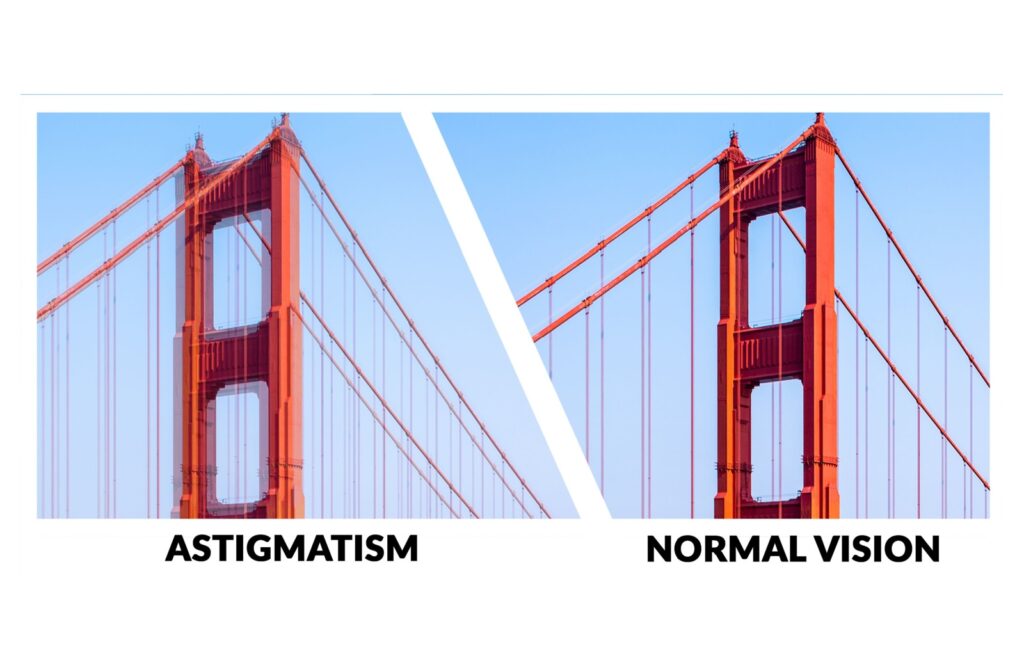
If you experience blurry or distorted vision, you might have astigmatism. This is a common and treatable refractive error that relates to the curve of your eye’s cornea or lens. A thorough evaluation by your eye doctor is the definitive way to diagnose astigmatism and find the right solution for your eyes.
A comprehensive eye exam at our Fountain Valley practice helps us to understand your vision needs and map out a path to clear sight.
What Are the Common Signs of Astigmatism?
Astigmatism can affect each person a little differently. Your vision may seem fuzzy or stretched out, almost like looking through a warped window. Some of the most frequent symptoms include:
- Vision that is blurry or distorted at all distances
- Headaches, particularly around the temples or forehead
- Eye discomfort, often related to digital eye strain, especially after reading or using a computer
- Difficulty with vision at night, such as seeing halos around lights
- The need to squint your eyes to see objects clearly
The Eye Tests Used to Diagnose Astigmatism
An eye doctor uses several painless tests to check for astigmatism. These tools help us measure the shape of your cornea and see precisely how your eyes focus light.
Visual Acuity Test
You’re likely familiar with this one—it’s the classic eye chart test. We’ll ask you to read letters from a chart positioned about 20 feet away. This simple test gives us a baseline measurement of how sharp your vision is from a distance.
Keratometry & Corneal Topography
A keratometer is an instrument that measures the curve of your cornea. It helps us see if the front surface of your eye is shaped more like a football than a basketball (a key indicator of astigmatism). For a more in-depth look, we can use a corneal topographer, a technique that creates a detailed 3D map of the cornea’s surface.
Phoropter & Retinoscope
The phoropter is the large instrument with many lenses that we place in front of your eyes. As you look through it at the eye chart, we’ll ask you questions like, “Which is clearer, one or two?” Your answers help us pinpoint the lens power needed to correct your vision.
We also use a retinoscope, a handheld tool that shines a light into your eye, to see how light reflects from your retina.
Do You Need Eye Dilation for an Astigmatism Test?
Tests for astigmatism (like keratometry) don’t always require your eyes to be dilated. We can gather a lot of information about your cornea’s shape and your refractive error without needing drops.
However, we may recommend a dilated pupil exam as part of your complete eye health check-up. Dilation widens your pupils, which gives us a much better view of the structures inside your eye, like the retina and optic nerve. This helps us check for other eye conditions beyond just astigmatism.
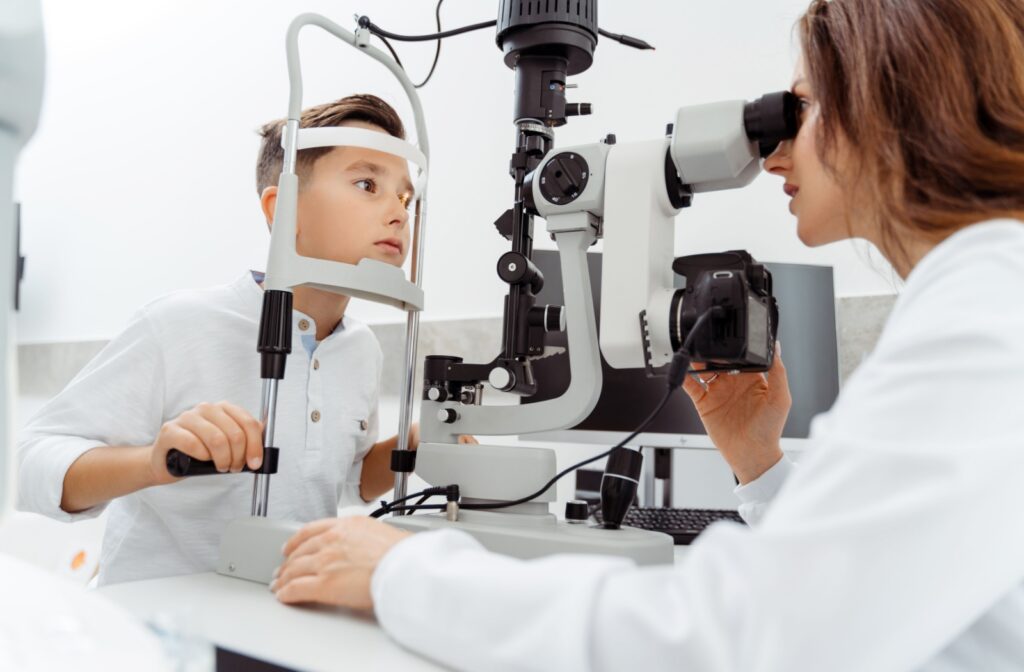
Astigmatism in Children & Toddlers
Children can be born with astigmatism or develop it as they grow. Since young kids may not have the words to tell you their vision is blurry, they often just accept their situation as normal.
Our team has experience working with children, so we know how to spot the signs of astigmatism even in toddlers. We use various techniques and equipment to make the exam comfortable and engaging for our youngest visitors, so that we can support their learning, coordination, and overall development.
Next Steps After an Astigmatism Diagnosis
If we find that you have astigmatism, the next step is a conversation about your options for vision correction. Fortunately, correcting astigmatism is usually very straightforward.
For most people, prescription eyeglasses or contact lenses for astigmatism are the go-to solutions. These corrective lenses are designed to counteract the irregular shape of your cornea or lens.
If you’ve been dealing with blurry vision or frequent headaches, it’s time to find out why. An eye exam can give you the answers you need and put you on the path to better sight. At Dr. Goldstone Fountain Valley, we’re here to help you and your family with all your eye care needs.
Contact us today to schedule your comprehensive eye exam.