

Key Takeaways
- Astigmatism can cause light to focus unevenly, resulting in blurred or distorted vision.
- Your pupils naturally get larger in low light, which can make some vision imperfections and glare more noticeable.
- It may be time for an eye exam if you notice halos around traffic lights.
- Proper glasses or well-fitting contact lenses can help you see with confidence while driving.
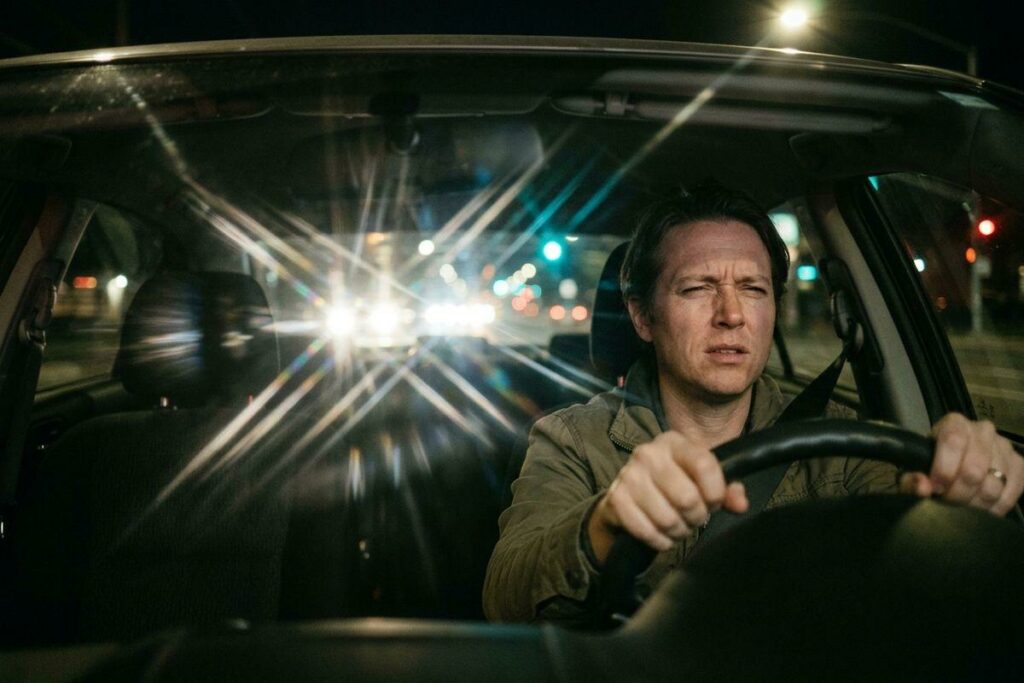
You hop in your car after dinner to run a quick errand, but the streets seem darker than usual. Oncoming headlights blind you with sharp streaks of light. This common struggle may be astigmatism, and it leaves many people nervous about late-night drives.
Astigmatism makes night driving harder because the curvature of the cornea prevents light from focusing into a single sharp point, turning bright headlights into blurry stars when your pupils widen in the dark. Our team at Total Vision Fountain Valley can perform a simple eye exam to identify this refractive error and prescribe you corrective lenses so you can get back to driving comfortably.
What Is Astigmatism?
Your cornea is the clear outer layer of your eye. In a normal eye, this corneal layer is smooth, similar to the shape of a round basketball. This means that light can enter the surface smoothly, hitting the back of the eye (the retina) in a single clear point.
With astigmatism, the cornea or lens has an uneven curvature, which prevents light from focusing to a single sharp point on the retina. This uneven surface bends the light in unpredictable ways, making images appear blurry up close or far away as a result.
How Darkness Can Make Vision Seem Worse
In low light, your pupils naturally become larger. This can make existing refractive errors (like astigmatism) and other optical imperfections more noticeable, so vision may seem blurrier or less clear at night.
That’s why many people with astigmatism notice that night driving is more difficult. Bright headlights can make these visual effects more noticeable and make it harder to see the road clearly.
Common Road Vision Symptoms
If night driving has been making you more uncomfortable recently, it may be time to have your eyes checked. Here are a few common signs associated with astigmatism. If any of them sound familiar, we encourage you to come see our team for an eye exam:
- You notice halos or starbursts around traffic lights.
- Oncoming headlights seem excessively bright.
- You notice long streaks extending from street lamps.
- You need to squint to see traffic signs or road lines.
If your eye doctor determines that you have astigmatism, they can recommend contact lenses or corrective lenses to get you back to seeing comfortably.
How an Eye Doctor in Fountain Valley Can Help
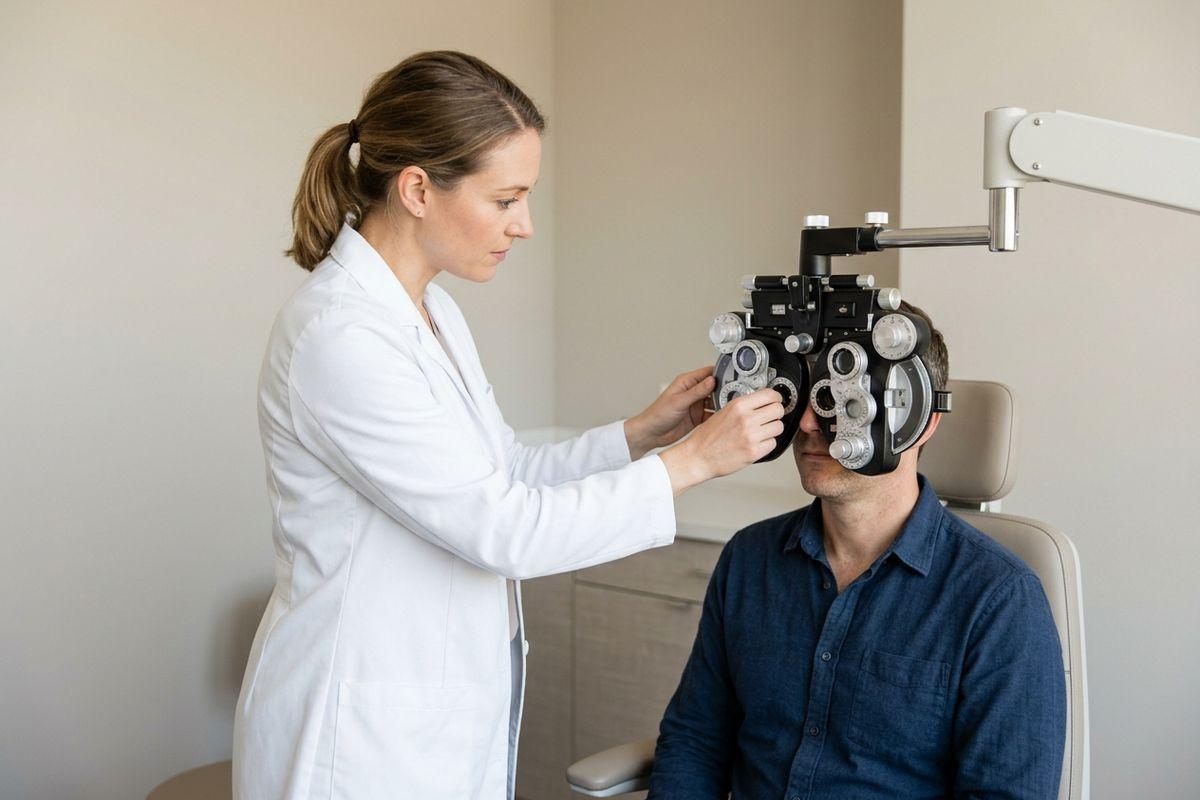
At Total Vision Fountain Valley, we’re here to support your long-term vision health. Routine visits keep your prescription up to date and track changes over time. Our team also provides care for your whole family, helping you and your loved ones stay proactive about your overall health.
Vision Correction
A precise lens prescription addresses your unique eye shape, helping to improve your sight. Your eye doctor can write a prescription for your eyes so you can get glasses or contact lenses that fit your life and visual needs. If you’re curious about contact lenses, we provide thorough fittings for people with astigmatism, helping you get the precise fit you need to see clearly and comfortably all day.
Schedule Your Eye Exam
If you’ve noticed that night driving has gotten more difficult recently, we’d love to see you for an eye exam. Our team at Total Vision Fountain Valley can assess your eyes and guide you towards the right vision correction to help you feel confident on the roads again. Schedule your next exam today.